Best Smart Water Shut-Off Valves for Homes (Wi-Fi Leak Auto-Stop) – 2026
Water damage ranks near the top of homeowner nightmares — and when water starts leaking, you want smart protection that stops the problem before the damage starts. A smart water shut-off valve automates the water shutoff process when a leak is detected (via sensors, patterns, or triggers), giving you peace of mind and insurance-level protection.
Related:
Smart Leak Detectors |
Sump Pumps w/ Wi-Fi Alerts |
Smart Dehumidifiers |
Wi-Fi Range Extenders
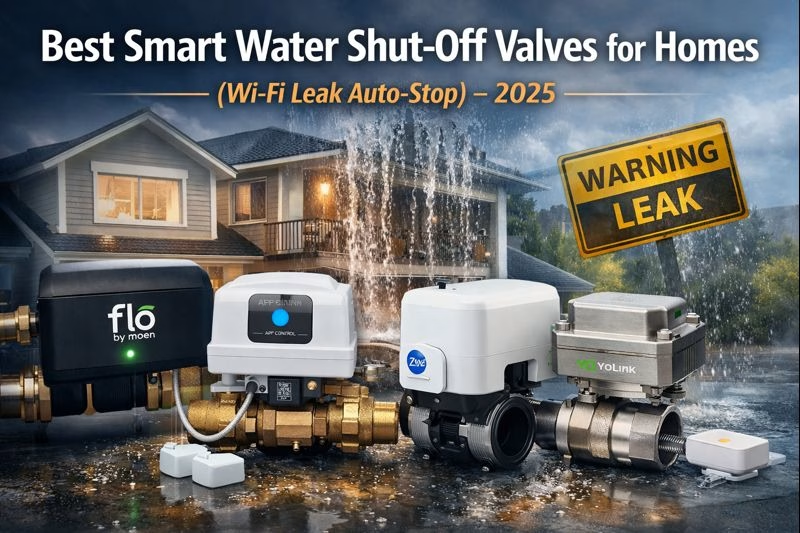
FLO BY MOEN SMART WATER MONITOR & SHUTOFF
Best Premium “Set It & Forget It” Whole-Home Protection
If you want the most complete safeguard against leaks — including slow drips, abnormal pressure, and usage pattern alerts — Flo is the premium choice. It combines proactive monitoring and automatic shutoff so you’re covered before a small issue becomes a large repair.
- Who it’s for: Homeowners with finished basements, multi-story homes, or any high-value plumbing risk areas.
- Why it’s worth it: Whole-home monitoring + smart shutoff in one system — ideal for high-risk properties.
- Real-world tip: Works best paired with a reliable Wi-Fi setup in utility spaces.
ISPRING LS43WL AUTOMATIC WATER SHUT-OFF VALVE
Best for Fast Sensor-Triggered Shutoff
The iSpring LS43WL focuses on quick action: when a connected leak sensor detects water, this valve shuts off water flow fast. It’s built for homeowners who want leak protection wherever leaks are most likely — like under sinks, around water heaters, and behind washing machines.
- Who it’s for: Anyone wanting targeted leak shutoff with minimal fuss.
- Why it’s compelling: Great value for an automatic shutoff that integrates with common home water leak sensor setups.
- Real-world tip: Pair with leak sensors in high-risk locations for max protection.
ZOOZ TITAN Z-WAVE LONG RANGE WATER VALVE ACTUATOR (ZAC36)
Best “No-Plumber” Main Shutoff (Z-Wave Integration)
If you already run a Z-Wave smart home system (SmartThings, Ring Alarm, Hubitat, etc.), this actuator is a fantastic way to automate your main shutoff valve without a major plumbing job. It pairs with leak sensors and smart triggers to automate shutoff with strong wireless range.
- Who it’s for: Tech-savvy homeowners + hub users who want robust automations.
- Why it’s useful: Long range and reliable Z-Wave connectivity make this a strong DIY option.
- Real-world tip: Ideal when leak sensors are far from your router but within your hub network.
YOLINK SMART WATER VALVE CONTROLLER
Best Budget-Friendly DIY Shutoff Controller
This is a great pick if you want to add smart shutoff capability without changing plumbing. YoLink’s controller works with sensors to drive an automated shutoff control that’s perfect for garages, basements, and mechanical spaces where Wi-Fi can be spotty.
- Who it’s for: DIYers & homeowners with existing shutoff valves.
- Why it’s smart: Affordable, expandable, and strong wireless coverage.
- Real-world tip: Verify valve compatibility before purchase for seamless installation.
YOLINK MOTORIZED STAINLESS STEEL BALL VALVE
Best Smart Shutoff Valve Replacement
If you’d prefer a permanent upgrade to your plumbing, this motorized ball valve gives you a real automated shutoff built-in. It’s ideal when you’re already replacing valves or doing plumbing refresh work — the result is a seamless and tidy smart shutoff solution.
- Who it’s for: Homeowners planning upgrades or comfortable with professional install.
- Why it’s compelling: True valve replacement — not just an add-on actuator.
- Real-world tip: Bundling with other plumbing upgrades can save on labor.
Quick Setup Checklist (Avoid the #1 Mistakes)
- Test monthly: Run a quick open/close test so you aren’t surprised during an emergency.
- Sensor placement matters: Position water sensors in likely leak zones — water heater pan, washer, under-sink areas.
- Wi-Fi isn’t optional: A small extender near mechanical spaces goes a long way for alerts.
- Name sensors clearly: “Basement WH Leak Sensor” beats generic labels at 2am alerts.
More helpful guides:
Leak Detectors |
Sump Pump Alerts |
Dehumidifiers |
Range Extenders
Disclosure: As an Amazon Associate, we earn from qualifying purchases.