Best Smart Devices for Vacation Homes (Remote Monitoring Essentials) 2026
Vacation homes are different from primary homes for one simple reason: problems can sit unnoticed for days (or weeks). A power outage knocks out heat, pipes freeze, and you don’t find out until a neighbor calls. A slow leak starts under a sink, and it’s “small” for a while—until it isn’t. The best strategy is not to over-automate; it’s to install a few smart devices that give you fast, reliable alerts when something changes.
The picks below focus on the most common vacation-home risks: temperature drops, humidity trends, water leaks, power failures, and exterior awareness—so you can respond before damage happens.
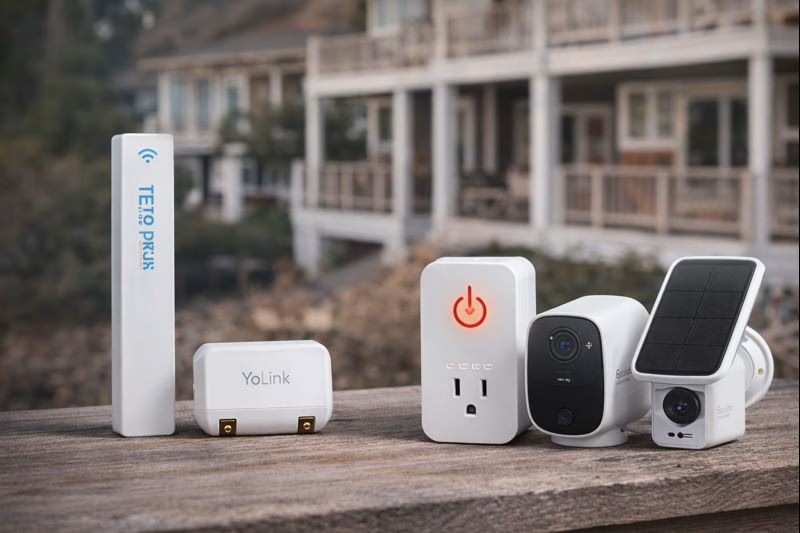
TEMP STICK WI-FI TEMPERATURE & HUMIDITY SENSOR
Best Overall for “Is the House Safe?” Monitoring
If you only add one device to a vacation home, a temperature/humidity monitor is usually the best place to start. It answers the big questions quickly: did the heat go out, is the house getting too cold, and is humidity creeping into a mold-risk range while the home sits closed up. It’s especially helpful in winter to catch temperature drops before pipes freeze.
What to Know Before Setup: People often place this in the most convenient spot (like near the router), but that can hide real risks. You want it where problems show up first—near plumbing walls, a lower level, or the area most vulnerable to cold drafts.
Why We Chose This: It’s practical, alert-driven monitoring that helps prevent the biggest “away from home” disasters.
- Best for: freeze prevention, humidity monitoring, general peace of mind
- Good fit if: you want alerts without constant app-checking
- Helpful tip: Set a “warning” temp above freezing so you have time to act
YOLINK SMART POWER FAIL ALARM
Best for Knowing About Outages Immediately
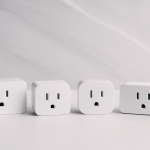
Power loss is often the trigger for everything else: no heat, no sump pump, no dehumidifier, no router. A power fail alarm gives you immediate awareness when the outlet goes dead and when it comes back—so you’re not guessing whether a storm caused issues while you were away.
What to Know Before Setup: The most useful placement is an outlet that reflects your “critical systems.” If your heat, sump pump, or dehumidifier are on a specific circuit, plug the alarm into an outlet on that same circuit so the alert maps to what you actually care about.
Why We Chose This: It’s one of the simplest ways to catch the root cause of vacation-home disasters: unnoticed outages.
- Best for: storm-prone areas, homes with basements, winter monitoring
- Good fit if: you want “power out / power back” notifications
- Helpful tip: Pair with a temp sensor so you see both outage and impact
YOLINK WATER LEAK SENSOR (NO SUBSCRIPTION)
Best for Catching Leaks Before They Become Repairs
Leaks are brutal in vacation homes because they don’t announce themselves. A sensor under a sink, near a water heater, or by a washing machine can turn a quiet drip into an immediate alert. This is one of those low-cost devices that can prevent high-cost damage.
What to Know Before Setup: Don’t just place it where it’s tidy. Put it where leaks actually start: under supply lines, behind toilets, near water heaters, and around sump areas. If you’re only buying a few sensors, prioritize the highest-risk plumbing zones first.
Why We Chose This: Long-range reliability and simple alerts are ideal when you’re not onsite to check anything manually.
- Best for: sinks, toilets, water heaters, washing machines, basements
- Good fit if: you want a straightforward leak alert system
- Helpful tip: First sensor should go by the water heater or main plumbing cluster
EUFY SECURITY SOLOCAM S40 (SOLAR, LOCAL STORAGE)
Best Exterior Awareness Without Subscription Pressure
For a vacation home, exterior awareness is less about “security theater” and more about knowing what’s happening when you’re not there—deliveries, unexpected visitors, storm aftermath, or whether someone arrived to check the house. A solar camera is especially useful because it reduces the maintenance and charging you’d otherwise have to do between trips.
What to Know Before Setup: Solar cameras still need decent sunlight. If the mounting area is shaded by trees or eaves, performance may be inconsistent. Choose a location with reliable daylight exposure and a clear view of the approach to the home.
Why We Chose This: Solar + local storage is a strong fit for second homes where ongoing subscriptions and constant maintenance aren’t ideal.
- Best for: driveways, entrances, detached properties
- Good fit if: you want simple monitoring without monthly fees
- Helpful tip: Angle it toward the “approach path,” not just the door
REOLINK ARGUS 3 PRO (SOLAR, LOCAL STORAGE)
Best Alternate Outdoor View (Second Camera Angle)
Vacation homes often benefit from more than one camera angle: one near the main entry and another covering the driveway, side yard, or a basement entry/bulkhead door. The Argus 3 Pro is a good pick for creating that second viewpoint without making the setup complicated.
What to Know Before Setup: Don’t mount cameras too high “for security.” You’ll lose useful detail. A slightly lower mount often gives more practical footage and better detection while still being out of reach.
Why We Chose This: It’s a solid option for adding coverage without forcing a subscription-first ecosystem.
- Best for: second camera angles, side doors, detached garages
- Good fit if: you want wider property awareness while away
- Helpful tip: Use one camera for entry, another for “what would I want to know?” coverage
Quick Vacation Home Placement Checklist
- Temp/Humidity sensor: near plumbing walls, lower levels, or the coldest zone in winter
- Power fail alarm: outlet tied to critical systems (heat/sump/dehumidifier circuit)
- Leak sensors: water heater, under sinks, toilets, washer hookups, basement risk zones
- Cameras: one for the main approach, one for secondary entry/driveway visibility
Disclosure: As an Amazon Associate, we earn from qualifying purchases.