Best Smart Devices for Garages (Door, Temperature, Power & Security Alerts) 2026
The garage is one of the most overlooked spaces in a home — and one of the most likely to cause problems. Garage doors get left open, temperatures swing wildly, power outages go unnoticed, and the space often connects directly to the rest of the house.
The goal of smart devices in a garage isn’t automation for convenience. It’s awareness: knowing when something changes so you can respond before it becomes a safety, security, or maintenance issue.
Quick Take
If you only add three things: a smart garage door controller for open/close alerts, a temperature sensor for extreme heat or cold, and a power-fail alert for critical outlets. Add a camera only if you want visual confirmation after an alert.
What to Monitor in a Garage
- Garage door status: open too long, opened unexpectedly, or not fully closed
- Temperature swings: extreme heat or cold that can affect the house, plumbing, or stored items
- Power loss: impact to openers, chargers, freezers, or secondary refrigerators
- Motion or activity: deliveries, unexpected access, or post-storm checks
Best Smart Devices for Garages
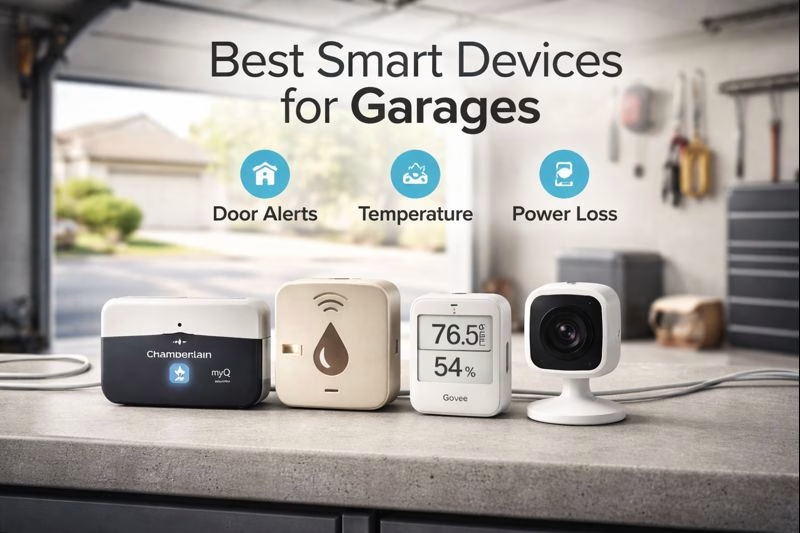
Chamberlain myQ Smart Garage Control (G0401)
Best for: alerts when your garage door opens, closes, or is left open
A garage door left open is one of the most common (and expensive) oversights homeowners make. Whether it’s overnight, during a storm, or while you’re away, open-door alerts give you immediate awareness and remote control.
Where it works best: standard garage door openers where you want open/close alerts and remote access without replacing the entire opener.
Why We Chose This: myQ is widely supported, reliable, and designed specifically for garage monitoring. It does one job well: keeping you informed about door status.
What to Know Before Setup: Compatibility matters. Double-check that your existing opener is supported before installing.
meross Smart Garage Door Opener (MSG100)
Best for: a budget-friendly alternative with reliable alerts
If you want garage door alerts and remote control without paying for a premium ecosystem, meross is a strong option. It handles the basics well and integrates with common smart home platforms.
Where it works best: homeowners who want door-open alerts and app control at a lower price point.
Why We Chose This: It delivers the same core functionality as higher-end controllers at a more accessible price.
What to Know Before Setup: Installation involves wiring into the opener. It’s straightforward, but not completely plug-and-play.
YoLink Smart Power Fail Alarm
Best for: knowing instantly when garage power goes out
Garages often power freezers, chargers, tools, or secondary refrigerators — and power loss can go unnoticed for hours or days. A power-fail alarm removes the guesswork by alerting you the moment power drops.
Where it works best: the outlet powering a freezer, garage fridge, or the circuit you care most about.
Why We Chose This: It’s simple, reliable, and high ROI. You’ll know about outages even if you’re away from home.
What to Know Before Setup: Plug it into an outlet that truly represents “if this is off, I need to know.” Otherwise, the alert isn’t actionable.
Govee WiFi Temperature & Humidity Sensor (H5179)
Best for: monitoring extreme heat, cold, and humidity swings
Garages experience wider temperature and humidity swings than most rooms in a home. Monitoring these changes helps protect items stored in the garage and alerts you to conditions that could affect attached living spaces.
Where it works best: on an interior wall away from direct sun, near doors, or close to shared walls with the house.
Why We Chose This: Affordable, easy to deploy, and useful for spotting trends over time.
What to Know Before Setup: Avoid placing it directly next to exterior doors or vents, which can skew readings.
Blink Mini 2 (Indoor Plug-In Camera)
Best for: quick visual confirmation after an alert
A camera isn’t essential for every garage, but it can be helpful after a door-open alert or power event. A quick visual check can tell you whether everything looks normal without needing to walk out to the garage.
Where it works best: mounted inside the garage facing the door or main storage area.
Why We Chose This: Compact, affordable, and simple to set up — a low-friction way to add visual context.
What to Know Before Setup: It’s plug-in only and designed for indoor use, so placement matters.
A Simple Garage Monitoring Setup
- Garage door controller: alerts when doors open, close, or stay open
- Temperature sensor: tracks heat and cold extremes
- Power fail alarm: monitors critical outlets
- Optional camera: visual check after alerts
Final Thought
The best garage smart setup stays out of your way until something changes. Focus on door status, temperature, and power first — then add visibility only if it helps you make faster, calmer decisions.
Disclosure: As an Amazon Associate, we earn from qualifying purchases.