The Most Important Smart Devices for Basements & Lower Levels
Basements and lower levels are where home problems tend to start quietly. Water shows up after storms, humidity creeps up slowly, and power issues often go unnoticed until something stops working.
The goal of smart tech in these spaces isn’t convenience. It’s early awareness — catching issues before they turn into expensive repairs.
Quick Take
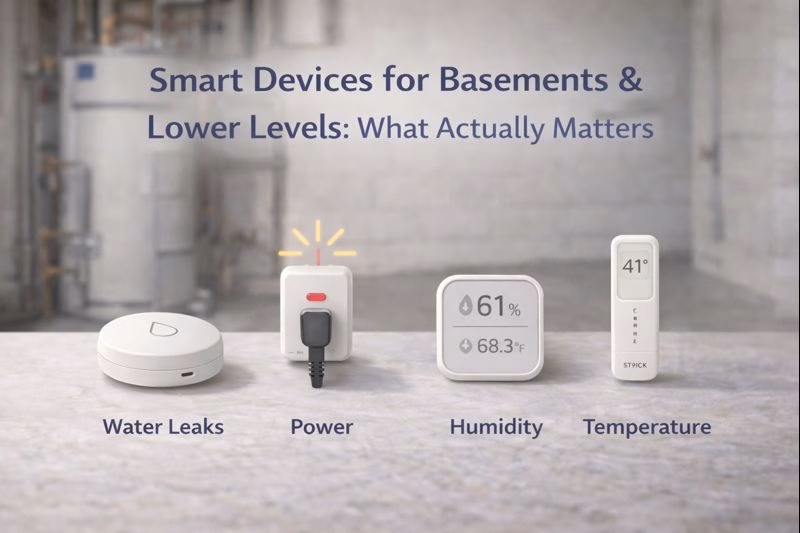
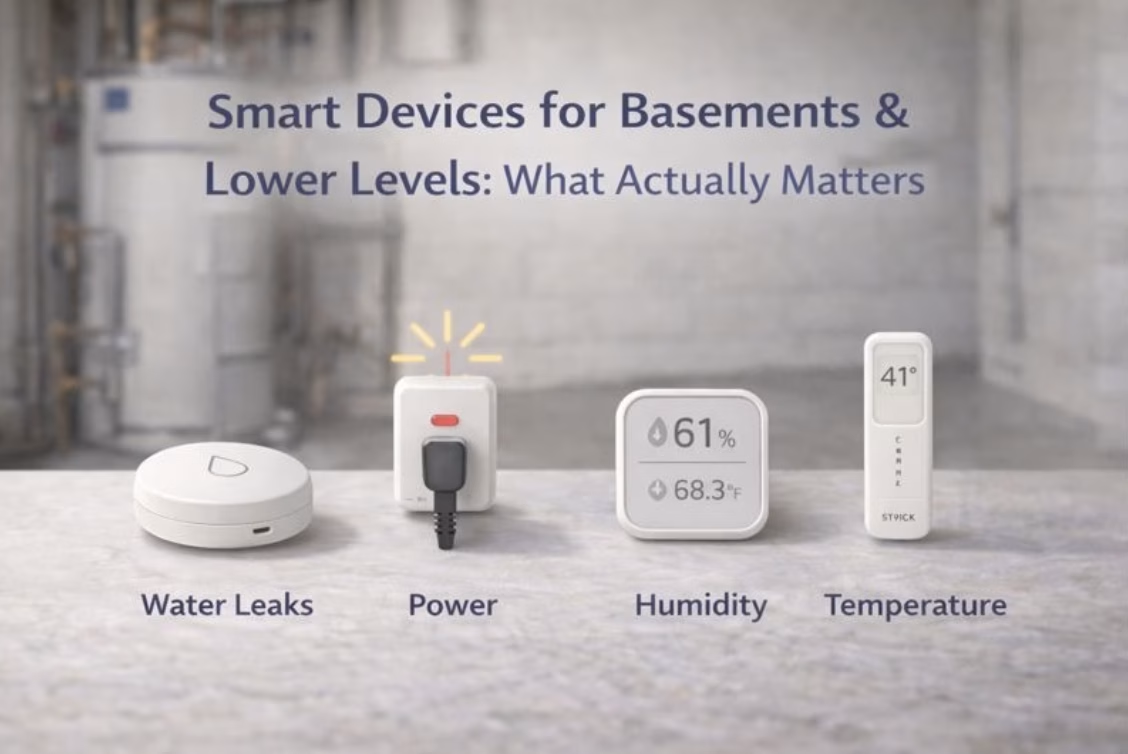
If you only buy 3 things: a leak sensor near known water risks, a power-fail alert on critical outlets, and a humidity or temperature sensor to track conditions over time.
Why Basements Need Different Monitoring
- Water risk: sump pumps, water heaters, foundation seepage
- Power dependence: dehumidifiers, sump systems, boilers
- Humidity: mold risk without obvious signs
- Temperature swings: cold corners near foundation walls
Smart Devices That Matter Most in Basements
YoLink Water Leak Sensor
Best for: catching small leaks before they spread
Basement water problems are often slow and subtle — a water heater starting to seep, a small foundation leak after heavy rain, or condensation collecting in the same corner.
Real review take: YoLink is especially useful in basements because it works well even when Wi-Fi coverage is weak. It gives you a clear, immediate “something is wet” alert.
Why We Chose This: Simple alerts reduce guesswork and help you respond early.
What to Know Before Setup: Place sensors at the source of leaks (water heater base, supply lines), not open floor areas.
YoLink Smart Power Fail Alarm
Best for: knowing when critical basement equipment goes offline
Many basement issues start with power loss. A dehumidifier stops running. A sump pump loses power. A boiler control goes offline.
Real review take: Power-fail alerts aren’t flashy, but they’re one of the most valuable basement tools. They tell you immediately when protection systems stop working.
Why We Chose This: It turns invisible outages into actionable alerts.
What to Know Before Setup: Plug it into the outlet that represents what you care about — not a random basement receptacle.
Govee WiFi Temperature & Humidity Sensor
Best for: tracking damp trends before problems appear
Humidity doesn’t always feel dramatic, but long-term trends tell the real story. Elevated moisture leads to musty smells, condensation, and eventually mold.
Real review take: Govee sensors are affordable enough to monitor multiple basement zones, helping you learn how your space behaves across seasons.
Why We Chose This: Trend data helps you act early instead of reacting to damage.
What to Know Before Setup: Avoid overly aggressive alert thresholds. Focus on sustained high humidity, not short spikes.
Temp Stick WiFi Temperature & Humidity Sensor
Best for: freeze-risk alerts in cold corners
Not all basements freeze evenly. Cold pockets near exterior foundation walls or plumbing runs can drop faster than the rest of the house.
Real review take: Temp Stick is widely used for freeze monitoring and remote properties. It’s simple, reliable, and focused on alerts that matter.
Why We Chose This: Freeze alerts give you time to act before pipes are at risk.
What to Know Before Setup: Set alerts at 40–45°F so you’re warned early.
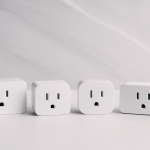
Amazon Smart Plug
Best for: simple control of basement equipment
Smart plugs can help manage lamps, fans, or other low-draw basement devices without complex automation.
Real review take: This is about simplicity. Schedules can reduce waste and eliminate the need for alerts altogether.
Why We Chose This: Low effort, immediate usefulness.
What to Know Before Setup: Only use with devices within the plug’s rated capacity.
A Simple Basement Starter Setup
- Leak sensor: water heater base or lowest risk corner
- Power alert: outlet powering dehumidifier or sump system
- Humidity sensor: foundation wall or finished-space edge
- Temperature sensor: cold corner near exterior plumbing
Final Thought
The best basement smart setup stays quiet — and then speaks up early when something changes. Focus on water, power, and humidity first. Everything else is optional.
Disclosure: As an Amazon Associate, we earn from qualifying purchases.