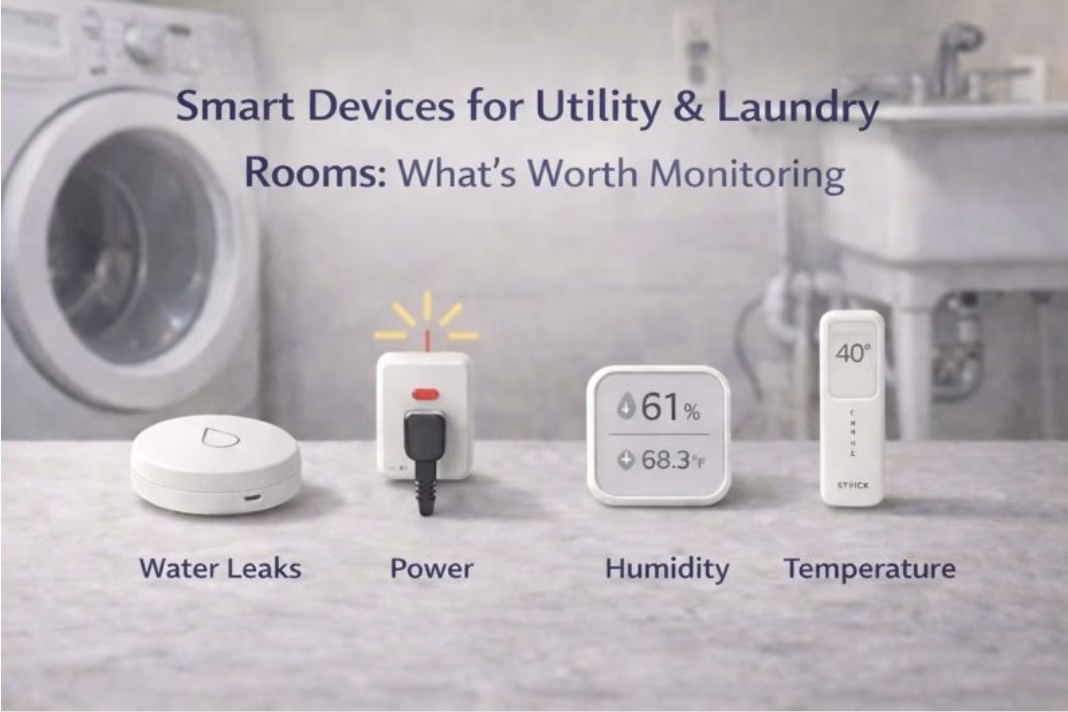
Smart Devices for Utility Rooms & Laundry Rooms (What’s Actually Worth Monitoring)
Utility rooms and laundry rooms are small spaces, but they’re responsible for a disproportionate number of home problems — leaks, humidity, power issues, and unnoticed equipment failures.
The goal of smart tech here isn’t automation or convenience. It’s early warning in high-risk zones, so minor issues don’t quietly turn into repairs.
Quick Take
If you only buy 3 things: a leak sensor behind the washer, a power-fail alert on critical outlets, and a humidity or temperature sensor to spot trends. Everything else is optional.
Why Utility & Laundry Rooms Need Monitoring
- Water connections: washer hoses, floor drains, utility sinks
- Power dependence: washers, dryers, dehumidifiers, sump-related circuits
- Humidity: damp air from dryers and poor ventilation
- Low visibility: problems often go unnoticed until damage appears
Smart Devices That Actually Make Sense in These Spaces
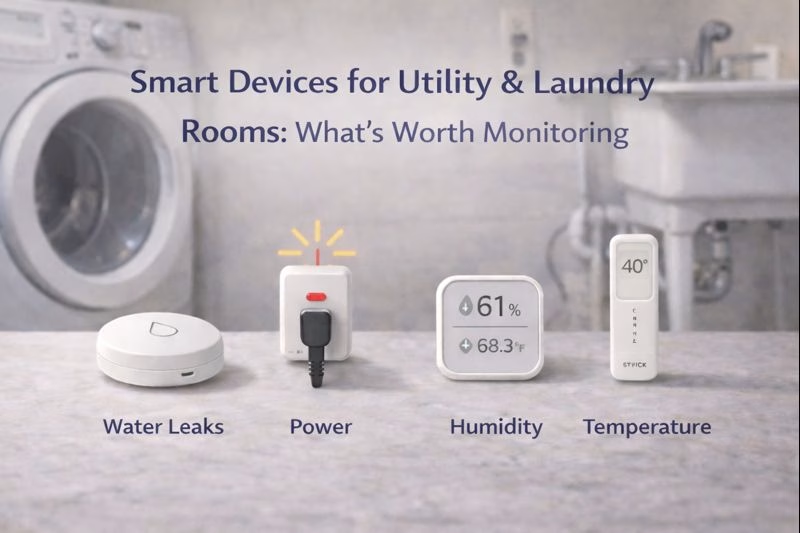
YoLink Water Leak Sensor
Best for: catching washer and utility leaks early
Laundry rooms are one of the most common sources of water damage. A loose hose, failing valve, or slow drip behind the washer can run for hours before anyone notices.
Real review take: YoLink’s long-range communication is especially helpful in utility rooms that may be far from routers or behind thick walls.
Why We Chose This: Leak sensors provide a clear, immediate alert — no guessing required.
What to Know Before Setup: Place sensors directly behind the washer or near supply lines, not in open floor areas where water might spread later.
YoLink Smart Power Fail Alarm
Best for: knowing when equipment loses power
Utility rooms often power equipment you rely on indirectly — dehumidifiers, sump-related outlets, or shared circuits. When power drops, you usually don’t notice right away.
Real review take: Power-fail alerts are one of the simplest ways to turn a hidden failure into an actionable alert.
Why We Chose This: It tells you exactly when protection systems stop working.
What to Know Before Setup: Plug it into the outlet that represents the equipment you care about most. Avoid shared outlets if possible.
Govee WiFi Temperature & Humidity Sensor
Best for: spotting humidity issues from poor ventilation
Dryers, utility sinks, and enclosed spaces can raise humidity without obvious warning signs.
Real review take: Govee sensors are affordable enough to monitor multiple utility zones and learn what “normal” looks like in your home.
Why We Chose This: Trend data helps you act before odors or moisture damage develop.
What to Know Before Setup: Focus alerts on sustained high humidity, not brief spikes during a single laundry cycle.
Temp Stick WiFi Temperature & Humidity Sensor
Best for: freeze-risk monitoring in utility areas
Utility rooms located near exterior walls, garages, or basements can experience temperature drops faster than living spaces.
Real review take: Temp Stick is widely used for freeze alerts and remote monitoring. It’s especially useful where plumbing runs near cold zones.
Why We Chose This: Early temperature alerts give you time to respond before pipes are at risk.
What to Know Before Setup: Set alerts at 40–45°F to allow enough response time.
Amazon Smart Plug
Best for: simple control of low-draw utility devices
Smart plugs can help manage fans, lights, or small devices without adding complexity.
Real review take: This is about convenience and waste reduction, not safety. Schedules can remove the need for alerts altogether.
Why We Chose This: Low effort, low cost, and immediately useful.
What to Know Before Setup: Avoid high-load appliances like washers or dryers. Stick to low-draw devices only.
A Simple Utility & Laundry Room Starter Setup
- Leak sensor: behind washer and near utility sink
- Power alert: outlet powering dehumidifier or sump-related equipment
- Humidity sensor: enclosed or poorly ventilated corner
- Temperature sensor: exterior wall or cold-adjacent area
Final Thought
Utility rooms don’t need a lot of smart tech — just the right kind. Focus on water, power, and air conditions first. If those are under control, the space can stay quiet and problem-free.
Disclosure: As an Amazon Associate, we earn from qualifying purchases.