Smart Home Insurance Discounts: What Devices Actually Help?
Home insurance companies don’t care whether a device is “smart.” They care whether it reduces risk — especially the kinds of risks that lead to expensive claims.
That’s why some smart home devices are more likely to qualify for insurance consideration than others. This guide focuses on devices that insurers actually care about, what they may recognize, and where expectations should stay realistic.
Quick Take
If you’re buying specifically with insurance in mind: prioritize water protection, fire/CO detection, and a security system. Not every carrier offers discounts for these devices, but these categories align most closely with claim reduction.
What Insurance Companies Actually Care About
- Water damage: burst pipes, appliance failures, hidden leaks
- Fire and CO risk: early detection reduces severity
- Theft and property damage: deterrence and faster response
Energy efficiency devices (like thermostats) are useful for homeowners, but they are far less consistently tied to insurance discounts.
Smart Home Devices That May Help With Insurance
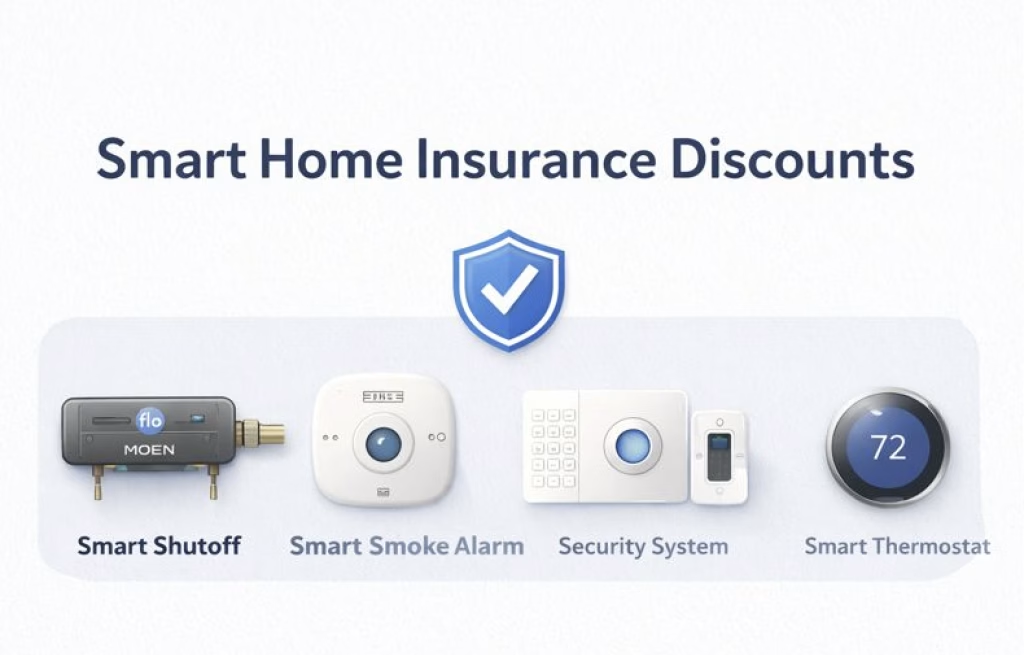
Flo by Moen Smart Water Monitor & Shutoff
Best for: reducing severity of water damage claims
Water damage claims are among the most expensive and common homeowners insurance claims. What makes water especially risky is how quickly damage spreads when leaks go unnoticed.
Real review take: Flo is one of the few devices that doesn’t just detect problems — it can actively stop them by shutting off your home’s water. That capability is why water shutoff systems are sometimes recognized by insurers, especially in higher-risk homes.
Why We Chose This: Preventing or limiting water damage directly aligns with insurance risk reduction.
What to Know Before Setup: Always ask your insurer what documentation they require. Some carriers want proof of installation or model details. Professional installation is common.
Ring Alarm Security System
Best for: theft deterrence and monitored-system eligibility
Security systems are one of the most commonly recognized smart home categories by insurance companies — particularly when professionally monitored.
Real review take: Ring Alarm is accessible and easy to scale. It works well for homeowners who want coverage on doors and windows without a complex custom install. Insurance recognition may depend on whether monitoring is enabled.
Why We Chose This: Security systems directly address theft and property damage risk, which insurers price into premiums.
What to Know Before Setup: If insurance discounts matter, confirm whether your carrier requires professional monitoring and whether they need a monitoring certificate.
First Alert SC5 Smart Smoke & Carbon Monoxide Alarm
Best for: reducing fire and CO incident severity
Fire and carbon monoxide events escalate quickly. Even when insurance discounts aren’t offered, early alerts can significantly reduce damage and risk.
Real review take: The First Alert SC5 provides smart alerts without relying on discontinued ecosystems. It’s a practical option for homeowners who want remote notifications when they’re away.
Why We Chose This: Faster awareness can reduce claim severity — which is exactly what insurers care about.
What to Know Before Setup: Keep receipts and model information. Some insurers may credit updated detectors as part of broader safety upgrades.
YoLink Water Leak Sensor
Best for: catching small leaks before they become claims
Not all water damage starts with a burst pipe. Slow leaks from water heaters, laundry hookups, and supply lines are common — and often ignored until damage appears.
Real review take: YoLink’s long-range connectivity makes it especially useful in basements and utility areas where Wi-Fi can be unreliable. While not always tied to discounts, it supports loss prevention.
Why We Chose This: Early detection helps prevent small issues from becoming insurance claims.
What to Know Before Setup: Place sensors at the source of leaks, not where water eventually spreads.
Nest Learning Thermostat
Best for: indirect risk reduction (freeze prevention)
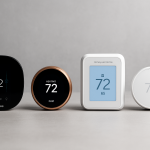
Smart thermostats don’t usually qualify for insurance discounts on their own, but they can reduce risk indirectly — especially in cold climates or second homes.
Real review take: Nest helps maintain consistent temperatures and avoid accidental freeze scenarios when homeowners forget to adjust heat before travel.
Why We Chose This: Freeze-related claims are costly, and temperature awareness helps reduce that risk.
What to Know Before Setup: Set conservative minimum temperatures and enable away modes if the home is unoccupied.
Final Thought
Insurance discounts should be treated as a potential bonus — not the only reason to buy smart home devices. Focus first on reducing real risk, then ask your carrier how they recognize safety upgrades.
Disclosure: As an Amazon Associate, we earn from qualifying purchases.