
Smart Home Setup for Older Homes (1930s–1960s Houses)
Older homes weren’t built with smart tech in mind — and that’s not a bad thing. Solid construction, plaster walls, older plumbing, and legacy electrical systems all come with strengths and quirks.
The key to adding smart home tech to an older house isn’t automation for its own sake. It’s monitoring risk without disturbing what already works.
Quick Take
If you live in an older home: focus on water monitoring, temperature awareness, and simple alerts. Avoid anything that requires invasive wiring or constant reconfiguration.
What Makes Older Homes Different
- Plumbing: older supply lines and fittings can fail quietly
- Electrical: fewer outlets, mixed upgrades, limited circuits
- Insulation: uneven temperatures and cold pockets
- Wi-Fi challenges: plaster, masonry, and long layouts
The best smart devices for older homes work around these realities instead of fighting them.
Smart Devices That Actually Make Sense in Older Homes
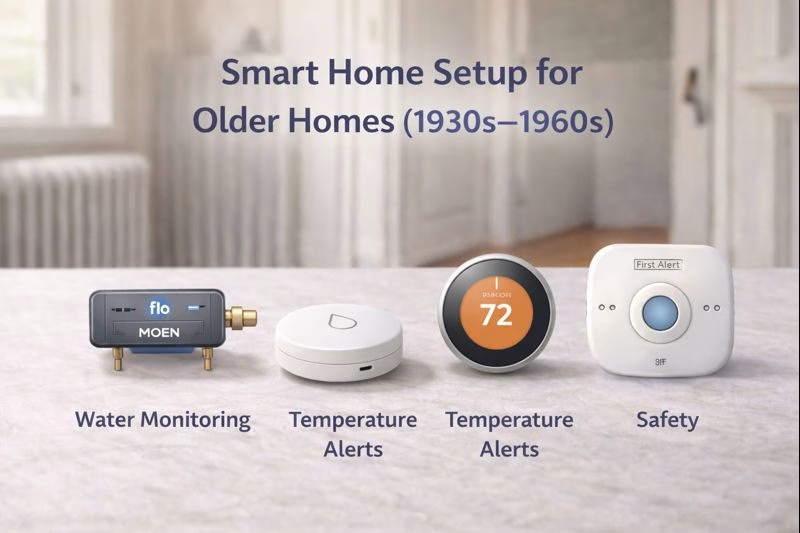
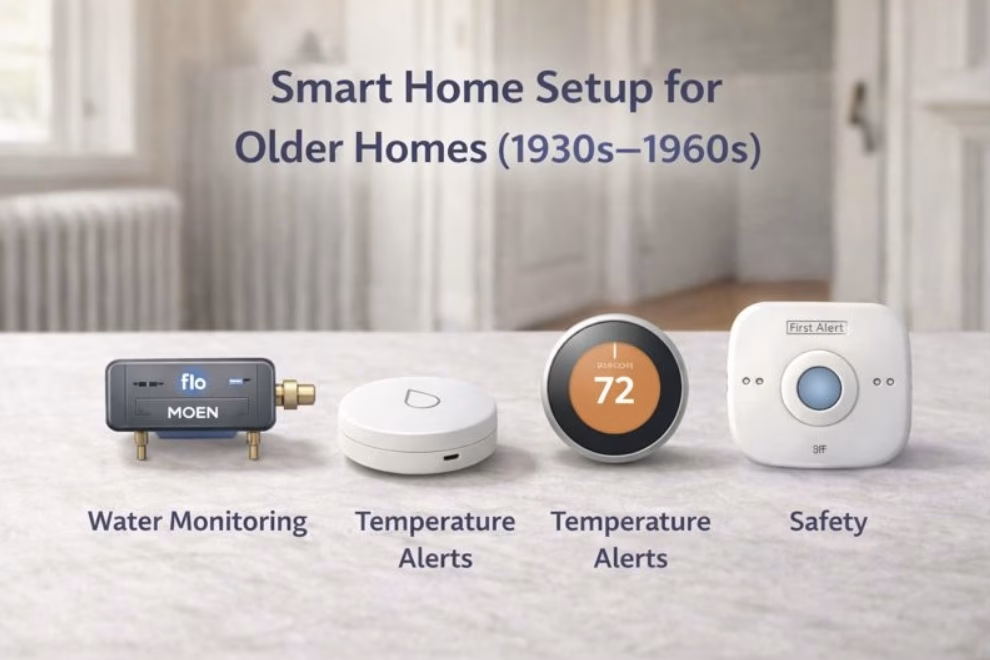
Flo by Moen Smart Water Monitor & Shutoff
Best for: protecting older plumbing from major damage
Older homes often have plumbing systems that predate modern fittings and flexible supply lines. When something fails, it can fail fast.
Real review take: Flo is especially valuable in older houses because it watches for abnormal water behavior across the entire system — not just individual fixtures. Automatic shutoff can prevent a small failure from becoming a major restoration.
Why We Chose This: Whole-home protection matters more when infrastructure is aging.
What to Know Before Setup: Installation usually requires a plumber. Spend time calibrating normal usage patterns to avoid false alerts.
YoLink Water Leak Sensor
Best for: monitoring problem spots without rewiring
Basements, crawl spaces, utility rooms, and laundry areas are common risk zones in older homes.
Real review take: YoLink’s long-range communication is a major advantage in older houses where Wi-Fi struggles to penetrate thick walls and lower levels.
Why We Chose This: It adds targeted protection without touching the home’s infrastructure.
What to Know Before Setup: Place sensors at leak sources (water heater base, supply lines), not open floor areas.
Nest Learning Thermostat
Best for: managing uneven temperatures
Older homes often have temperature swings between rooms, floors, or additions. Heating an entire house evenly can be inefficient.
Real review take: Nest works well in older homes because it reduces waste without requiring constant adjustment. It’s especially useful if your home warms unevenly or cools down quickly at night.
Why We Chose This: Temperature awareness helps prevent freeze risk and energy waste.
What to Know Before Setup: Check HVAC compatibility carefully. Some older systems may need a professional install.
Amazon Smart Plug
Best for: adding control without electrical work
Many older homes simply don’t have enough outlets — and adding them can be invasive.
Real review take: Smart plugs are one of the easiest upgrades for older homes. They let you control lamps, seasonal lighting, and small appliances without touching wiring.
Why We Chose This: Zero-invasive, low-risk, immediately useful.
What to Know Before Setup: Only use with low-draw devices. Avoid space heaters or high-load appliances.
First Alert SC5 Smart Smoke & Carbon Monoxide Alarm
Best for: modern alerts in legacy layouts
Older homes often have segmented layouts and closed-off rooms, which can delay awareness during emergencies.
Real review take: Smart smoke and CO alerts help bridge distance — especially in multi-level or spread-out homes.
Why We Chose This: Faster awareness reduces risk regardless of the home’s age.
What to Know Before Setup: Avoid nuisance-prone locations so alerts stay meaningful.
What to Skip in Older Homes
- Hard-wired smart switches unless already rewiring
- Over-automation that adds complexity
- Devices that require constant Wi-Fi strength
Final Thought
The best smart home setup for an older house is quiet, respectful, and protective. Focus on monitoring real risks, avoid invasive upgrades, and let the house keep doing what it’s done well for decades.
Disclosure: As an Amazon Associate, we earn from qualifying purchases.