A Beginner’s Guide to Smart Home Alerts (What to Monitor — and What to Ignore)
Smart home alerts are only helpful if you actually trust them. When everything triggers a notification, nothing feels urgent — and that’s how real problems get missed.
The goal isn’t more alerts. It’s fewer, clearer alerts that tell you exactly when something needs attention and when it doesn’t.
Quick Take
Good smart home alerts should be rare. Emergencies should interrupt you. Everything else should stay quiet unless you choose to check it.
The 3 Types of Smart Home Alerts
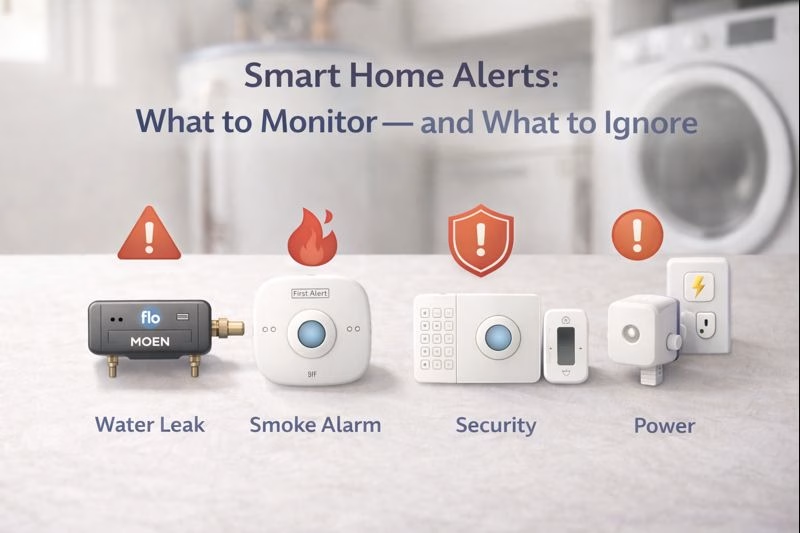
- Emergency alerts: require immediate attention (water leaks, smoke/CO, alarm triggers)
- Action-soon alerts: something changed, but you don’t need to panic (power loss, temperature drops)
- Log-only alerts: useful for reference, not notifications (routine motion, scheduled on/off events)
Smart Home Devices That Create Useful Alerts
Flo by Moen Smart Water Monitor & Shutoff
Best for: emergency alerts that can prevent major damage
Water problems often escalate quietly. A supply line fails, a pipe bursts, or an appliance leaks while no one is home — and the damage spreads fast.
Real review take: Flo is powerful because it doesn’t just notify you — it can automatically shut off your home’s water. That means even if you see the alert late, damage may already be limited.
Why We Chose This: Water shutoff alerts are true emergencies, and this is one of the few systems that can act immediately.
What to Know Before Setup: Spend time calibrating alerts so normal water use doesn’t trigger false alarms. When a Flo alert fires, it should feel serious.
First Alert SC5 Smart Smoke & Carbon Monoxide Alarm
Best for: alerts you should never ignore
Smoke and carbon monoxide alerts fall into the “drop everything” category. The value of a smart alarm is knowing immediately — even if you’re asleep, upstairs, or not home.
Real review take: The First Alert SC5 offers smart notifications without relying on discontinued platforms. It’s straightforward and focuses on early awareness.
Why We Chose This: These alerts should always be urgent and unmistakable.
What to Know Before Setup: Avoid placing alarms too close to kitchens or bathrooms to prevent nuisance alerts that train you to ignore them.
Ring Alarm Security System
Best for: alerts that matter when you’re away
Security alerts are where most people get overwhelmed. Door opens, motion triggers, package deliveries — it adds up quickly.
Real review take: Ring Alarm works best when you separate “home” behavior from “away” behavior. Armed alerts should feel urgent; everyday activity should stay quiet.
Why We Chose This: It’s flexible enough to create true emergency alerts without turning daily life into notification noise.
What to Know Before Setup: Use Home vs Away modes intentionally. If every door opening triggers a push notification, you’ll stop paying attention.
YoLink Water Leak Sensor
Best for: simple “something is wet” alerts
Leak sensors are one of the easiest smart home alerts to understand. When they trigger, you know exactly what to do: go check that spot.
Real review take: YoLink’s long-range connectivity makes it reliable in basements, utility rooms, and other areas where Wi-Fi can be inconsistent.
Why We Chose This: Clear, binary alerts reduce confusion and alert fatigue.
What to Know Before Setup: Place sensors where leaks start (water heater base, supply lines), not where water eventually spreads.
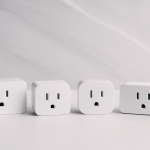
Amazon Smart Plug
Best for: avoiding alerts entirely through automation
Sometimes the best alert is no alert at all. Smart plugs let you schedule devices so you don’t need notifications to know whether something is on or off.
Real review take: Amazon’s smart plug is ideal for simple routines — lamps, seasonal lighting, or devices that should never run continuously.
Why We Chose This: Automation removes decisions and reduces unnecessary alerts.
What to Know Before Setup: Only use with low-draw devices within the plug’s rating. Think convenience and waste reduction, not heavy appliances.
How to Avoid Alert Fatigue
- Only enable push notifications for true emergencies
- Use schedules and modes to silence normal activity
- Test alerts once so you trust them when they matter
- If an alert doesn’t tell you what to do next, turn it off
Final Thought
The best smart home alert system is quiet most of the time — and unmistakable when something actually goes wrong. Start small, focus on real risks, and ignore everything that doesn’t require action.
Disclosure: As an Amazon Associate, we earn from qualifying purchases.