Best Smart Sensors for Pipe Freeze Prevention – 2026
Frozen pipes are one of those “small weather event, huge bill” problems. The tricky part is that pipes don’t freeze when you’re staring at them—they freeze quietly in crawl spaces, basements, garages, exterior walls, and poorly insulated utility corners.
The goal of a freeze-prevention setup is simple: get an early warning when temperatures in the risky areas start dropping, so you can take action (raise heat, open cabinets, run a drip, or insulate). The products below are Amazon-available sensors and thermometers that help you monitor those problem spots before it becomes a disaster.
Related:
Smart Water Shut-Off Valves |
No-Subscription Smart Home Devices |
Basement Monitoring Systems |
Power Outage Devices
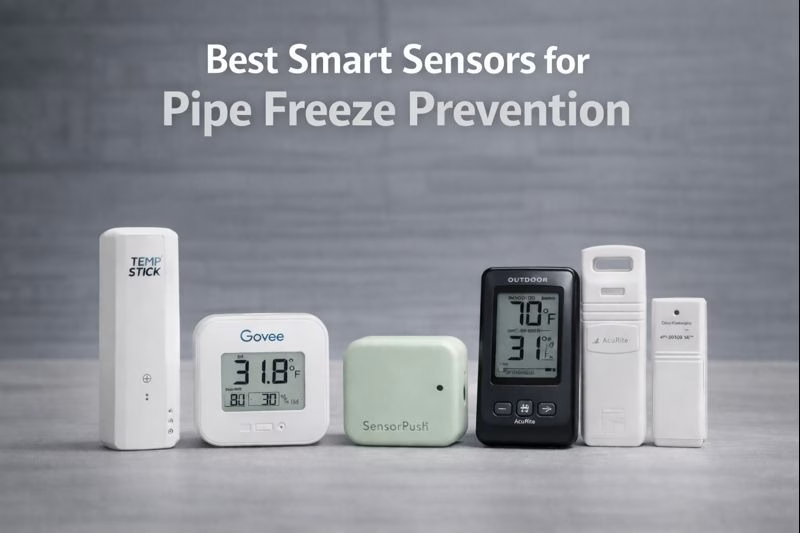
TEMP STICK WI-FI TEMPERATURE & HUMIDITY SENSOR
Best for Remote Freeze Alerts (Simple Wi-Fi Setup)
This is a strong “set it and forget it” choice if you want freeze prevention alerts without building a complicated smart home system. It’s great for vacation homes or any house where you want peace of mind in winter. The biggest win is getting notified early—before pipes hit the danger zone.
- Who it’s for: Vacation homes, weekend homes, or anyone who wants remote winter monitoring.
- Why it’s worth it: Easy way to spot a risky temperature drop early.
- Real-world tip: Place it near the coldest spot (exterior wall corner), not near the furnace/boiler.
GOVEE WI-FI THERMOMETER HYGROMETER
Best Budget Wi-Fi Sensor for Basements & Utility Rooms
For many homes, you don’t need fancy—just reliable temperature awareness in the right place. Govee is a great value option for monitoring basements, garages, mudrooms, and utility spaces. It’s also helpful for identifying drafts or insulation issues because you’ll see temperature patterns over time.
- Who it’s for: Anyone who wants an affordable way to monitor cold-risk areas.
- Why it’s worth it: Great “good enough” monitoring that can prevent a very expensive problem.
- Real-world tip: Set alerts a bit above freezing (think “risk threshold”), not at 32°F.
SENSORPUSH HT1 TEMPERATURE & HUMIDITY SENSOR
Best for Trend Tracking (Find the Cold Spots Fast)
SensorPush is ideal if you want more than a single reading—you want to understand what’s happening over time. It’s excellent for identifying which corner of the basement drops fastest, whether your garage swings dramatically overnight, and whether your crawl space is flirting with freezing during cold snaps.
- Who it’s for: Homeowners who want “data + clarity,” not just alerts.
- Why it’s worth it: Trends help you fix the root issue (drafts, insulation gaps) and prevent repeats.
- Real-world tip: Use one sensor to find the coldest spot first—then add a second sensor once you know where risk concentrates.
ACURITE DIGITAL THERMOMETER (INDOOR/OUTDOOR WIRELESS SENSOR)
Best Simple “At-a-Glance” Monitoring (No App Needed)
Not everyone wants an app or a smart ecosystem. This style of indoor/outdoor thermometer is perfect if your freeze risk is local and you just want quick visibility: “What’s the temperature in the garage right now?” or “Is the crawl space dropping?” It’s simple, cheap, and surprisingly effective.
- Who it’s for: People who prefer simple, non-app monitoring.
- Why it’s worth it: Quick visibility into risky zones without setup friction.
- Real-world tip: Put the display somewhere you’ll actually look during cold weather (kitchen counter beats a drawer).
LA CROSSE TECHNOLOGY WIRELESS INDOOR/OUTDOOR THERMOMETER
Best for Detached Garages or “Far Corner” Readings
This is another no-fuss option that works well when you want to monitor a specific zone—especially if the risky area is a detached garage, shed, or an out-of-the-way corner where you don’t want to rely on Wi-Fi. It’s a classic approach, but it solves a real problem reliably.
- Who it’s for: Detached garages, sheds, or homes where Wi-Fi coverage is inconsistent.
- Why it’s worth it: Simple monitoring that doesn’t depend on apps or subscriptions.
- Real-world tip: Position the remote sensor where pipes are closest to exterior air (near rim joists / exterior wall penetrations).
Quick Freeze-Prevention Checklist (What to Do When Temps Drop)
- Put sensors in the right places: crawl space access points, exterior wall corners, garages, utility rooms, and under sinks on exterior walls.
- Set alerts early: don’t wait until 32°F—set a warning threshold above that so you have time to act.
- Open cabinets: under-sink plumbing on exterior walls is a common freeze spot.
- Run a small drip: flowing water is less likely to freeze during extreme cold.
- Insulate and seal: draft sealing + pipe insulation prevents recurring winter panic.
Disclosure: As an Amazon Associate, we earn from qualifying purchases.