Smart Devices for Garages & Entry Points (What’s Actually Worth Monitoring)
Garages and entry points sit at the intersection of two risks: access and environment. They’re often lightly monitored, exposed to temperature swings, and connected to the rest of the house through doors, plumbing, or shared walls.
The goal of smart tech here isn’t constant surveillance. It’s clarity — knowing when something changes that actually matters.
Quick Take
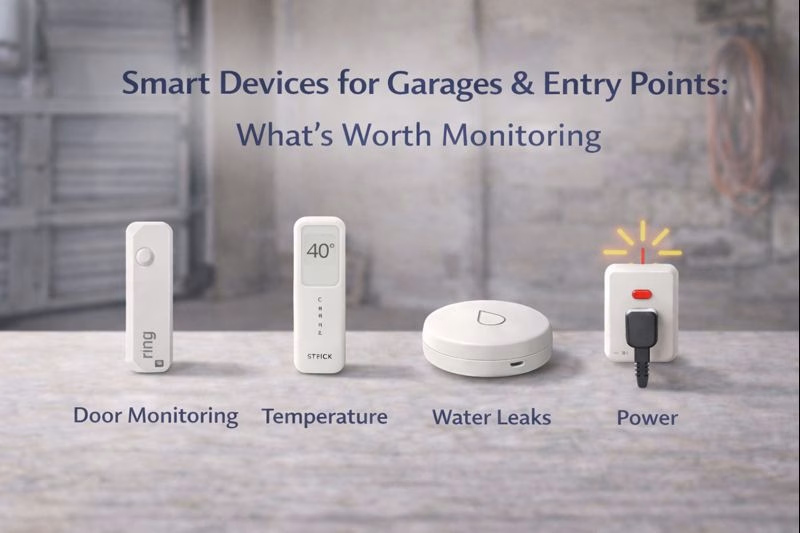
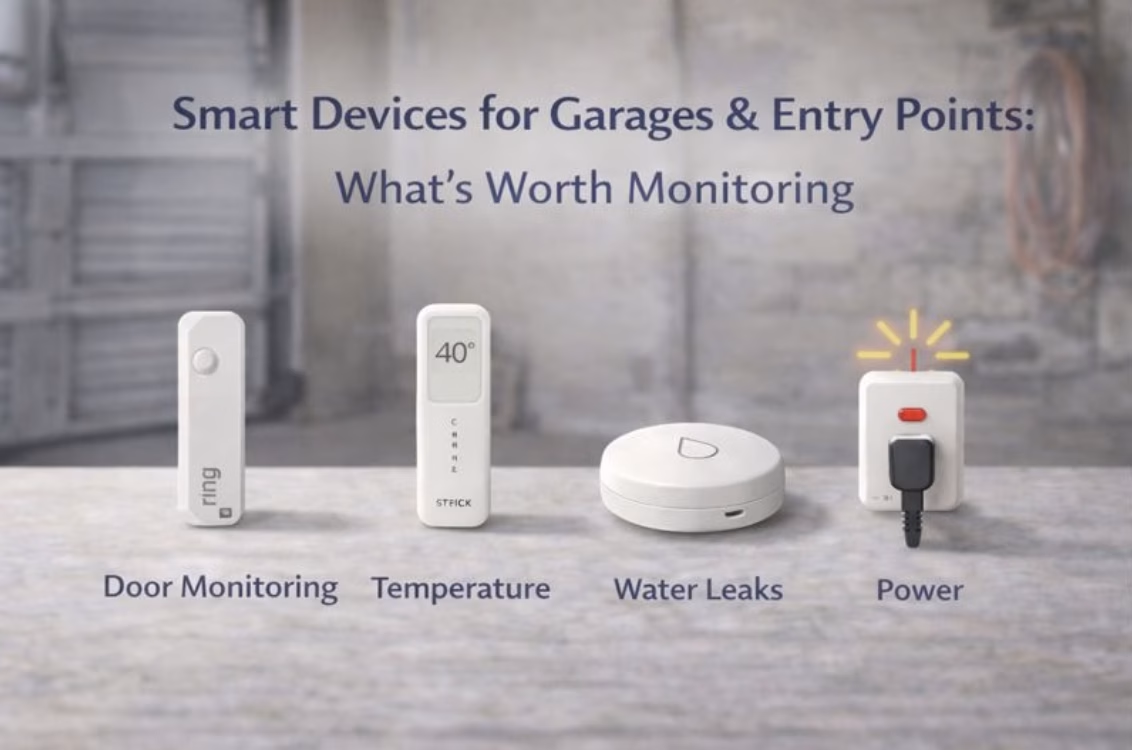
If you only buy 3 things: a security sensor for the main access point, a temperature sensor if the garage is attached, and a power or leak alert if utilities run through the space.
Why Garages & Entry Points Need Monitoring
- Access risk: doors are opened and closed frequently
- Temperature swings: uninsulated or semi-conditioned spaces
- Utilities: water lines, hose bibs, or mechanical runs
- Low visibility: issues often go unnoticed for days
Smart Devices That Make Sense for Garages & Entry Points
Ring Alarm Security System
Best for: monitoring doors and entry activity
Garages and side doors are common access points — and also easy to forget about during daily routines.
Real review take: Ring Alarm works well when you treat garage and entry sensors differently from main living spaces. Alerts should feel meaningful, not constant.
Why We Chose This: Door and motion sensors provide simple, clear awareness without requiring cameras everywhere.
What to Know Before Setup: Use modes intentionally. You don’t need notifications for every door open when you’re home.
Temp Stick WiFi Temperature & Humidity Sensor
Best for: freeze-risk alerts in attached garages
Attached garages often experience temperature drops before the rest of the house — especially overnight or during power outages.
Real review take: Temp Stick is useful here because it gives you real data, not guesswork. It’s especially helpful if plumbing runs through shared walls.
Why We Chose This: Freeze alerts give you time to act before pipes are at risk.
What to Know Before Setup: Set alerts at 40–45°F and place the sensor near the coldest wall, not the warmest part of the garage.
YoLink Water Leak Sensor
Best for: monitoring hidden water risks
Garages often house water heaters, hose bib connections, or utility lines that can fail quietly.
Real review take: YoLink’s long-range communication makes it reliable even in garages with weak Wi-Fi or thick walls.
Why We Chose This: Leak alerts are simple and immediately actionable.
What to Know Before Setup: Place sensors at the source — near supply lines or appliances — not open floor space.
YoLink Smart Power Fail Alarm
Best for: knowing when garage equipment loses power
If you rely on garage outlets for freezers, tools, chargers, or sump-related circuits, power loss matters.
Real review take: Power-fail alerts turn invisible outages into clear signals — especially useful when you’re away.
Why We Chose This: It tells you exactly when protection systems stop working.
What to Know Before Setup: Plug it into the outlet powering the device you care about most.
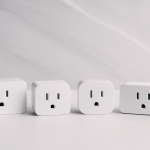
Amazon Smart Plug
Best for: basic control without over-automation
Smart plugs can help manage lights or low-draw devices in garages and entry areas.
Real review take: This is about convenience and predictability — not alerts.
Why We Chose This: Simple schedules reduce mental load and unnecessary notifications.
What to Know Before Setup: Avoid high-load devices like heaters or large tools.
A Simple Garage & Entry Starter Setup
- Door sensor: main garage or side entry door
- Temperature sensor: cold wall in attached garage
- Leak sensor: near water lines or appliances
- Power alert: outlet powering critical equipment
Final Thought
Garages and entry points don’t need constant monitoring — just the right signals. Focus on access, temperature, and hidden risks, and let everything else stay quiet.
Disclosure: As an Amazon Associate, we earn from qualifying purchases.